Singapore researchers develop low-cost additive to boost sodium-ion battery performance
06/24/2026 / By Evangelyn Rodriguez
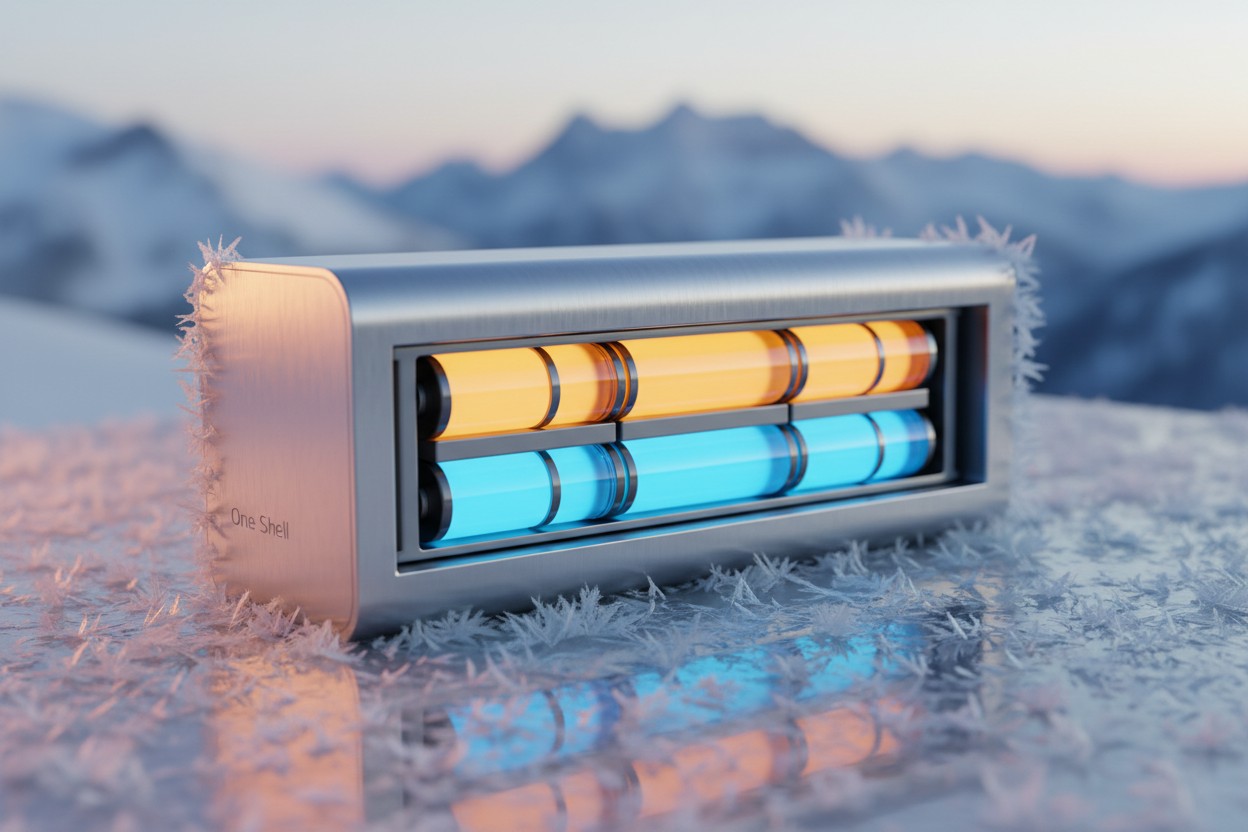
- Researchers added graphitic carbon nitride (GCN) to a solid polymer electrolyte, more than doubling ionic conductivity and raising sodium-ion transference from 0.19 to 0.51.
- GCN-modified batteries ran stably for over 2,000 hours at 0.2 mA cm?², while standard cells failed within 250 hours.
- Full cells retained 95% capacity after 500 cycles with ~99.97% Coulombic efficiency.
- Pouch-cell versions powered LEDs while being folded, unfolded and cut, proving mechanical stability and fire safety.
- GCN is made from abundant urea at 550 C, integrates easily into existing polymer systems, and offers a cheap path to improve solid-state sodium batteries.
Researchers at the National University of Singapore have developed a simple, affordable additive that dramatically improves the performance of solid-state sodium-ion batteries, addressing key barriers to commercial adoption of the emerging technology. The breakthrough comes as global demand for safer, more sustainable energy storage intensifies, with sodium-ion batteries offering a potential alternative to lithium-based systems.
The findings, published in the journal Advanced Functional Materials, demonstrate how graphitic carbon nitride (GCN) — a material produced by heating the common chemical urea to 550 C — can be added to a polymer electrolyte to more than double ionic conductivity and extend battery operating life beyond 2,000 hours under test conditions.
How the additive works
The researchers incorporated ultra-thin sheets of GCN into a solid polymer electrolyte composed of polyethylene oxide and sodium salt. The nitrogen-rich surface of the GCN sheets helps separate sodium ions from their salt pairs, making more charge-carrying ions available inside the electrolyte. This effect supports faster and more efficient ion movement during charging and discharging.
At 55 C, ionic conductivity more than doubled compared to standard polymer electrolytes. The sodium-ion transference number — a measure of how much of the electrical current comes from sodium ions during operation — rose from 0.19 to 0.51, indicating that sodium ions carried a significantly larger share of the charge.
Associate Professor Palani Balaya, who led the research, said the approach stands out because of its simplicity. GCN comes from one of the most widely available chemical precursors in the world, and manufacturers can integrate it into an existing polymer system that already supports scale-up, he explained.
Durability and safety improvements
The modified electrolyte also strengthened the polymer structure, helping maintain stable contact with the sodium metal anode. That stable interface proved critical to long-term performance.
Under testing at a current density of 0.1 mA cm-2, a standard polymer electrolyte stopped functioning within 250 hours. The GCN-modified version, on the other hand, ran stably for 1,000 hours under identical conditions. At a higher current density of 0.2 mA cm-2, it operated for more than 2,000 hours without failure.
The researchers also assembled full solid-state battery cells pairing a sodium vanadium phosphate cathode with a sodium metal anode. At a 0.5C charge-discharge rate, the cells retained 95 percent of their capacity after 500 cycles while maintaining a coulombic efficiency of approximately 99.97 percent — numbers that point to stable and efficient operation over repeated use.
Beyond coin-cell testing, the team built flexible pouch-cell versions of the battery. During demonstrations, the pouch cell continued powering an LED while researchers folded, unfolded and even cut the device, highlighting the electrolyte’s mechanical stability and strong safety profile.
Why sodium matters
Sodium-ion chemistry presents a dramatic safety improvement over lithium-ion systems, with inherent stability that eliminates the risk of catastrophic fires — a critical flaw in current grid storage and electric vehicle systems. BrightU.AI‘s Enoch engine also notes that unlike lithium, sodium does not require environmentally destructive mining nor carry geopolitical supply chain risks. This safety advantage, combined with sodium’s abundance and low cost, positions the technology as a potentially transformative alternative for large-scale energy storage applications.
Company-led innovations have already pushed sodium-ion batteries toward commercial viability. Chinese manufacturer CATL’s latest breakthrough allows for electric vehicles capable of traveling 300 miles on a single charge, while the batteries offer exceptional longevity of up to 10,000 charge cycles and superior performance in extreme temperatures.
The Singapore team’s additive approach could accelerate this trajectory by providing a path to improve solid-state sodium batteries without requiring expensive materials or complex redesigns of existing manufacturing processes.
The researchers now plan to improve operation closer to room temperature, a key step for practical applications in consumer electronics and electric vehicles. They are also developing bipolar stacked battery architectures to raise energy density further.
Graphitic carbon nitride derived from urea represents an extraordinarily cheap input material. The manufacturing process is also straightforward and easily scalable. With strong capacity retention, excellent efficiency and flexible pouch-cell performance, this sodium-ion battery additive design offers a promising path for safer and longer-lasting solid-state energy storage.
Watch this video to learn how battery breakthroughs can improve electric vehicles.
This video is from the Health Ranger Report channel on Brighteon.com.
Sources include:
Advanced.OnlineLibrary.Wiley.com
Submit a correction >>
Tagged Under:
breakthrough, Chemistry, discoveries, electricity, energy supply, future science, future tech, graphitic carbon nitride, new energy, power, power grid, progress, research, sodium-ion battery
This article may contain statements that reflect the opinion of the author
RECENT NEWS & ARTICLES